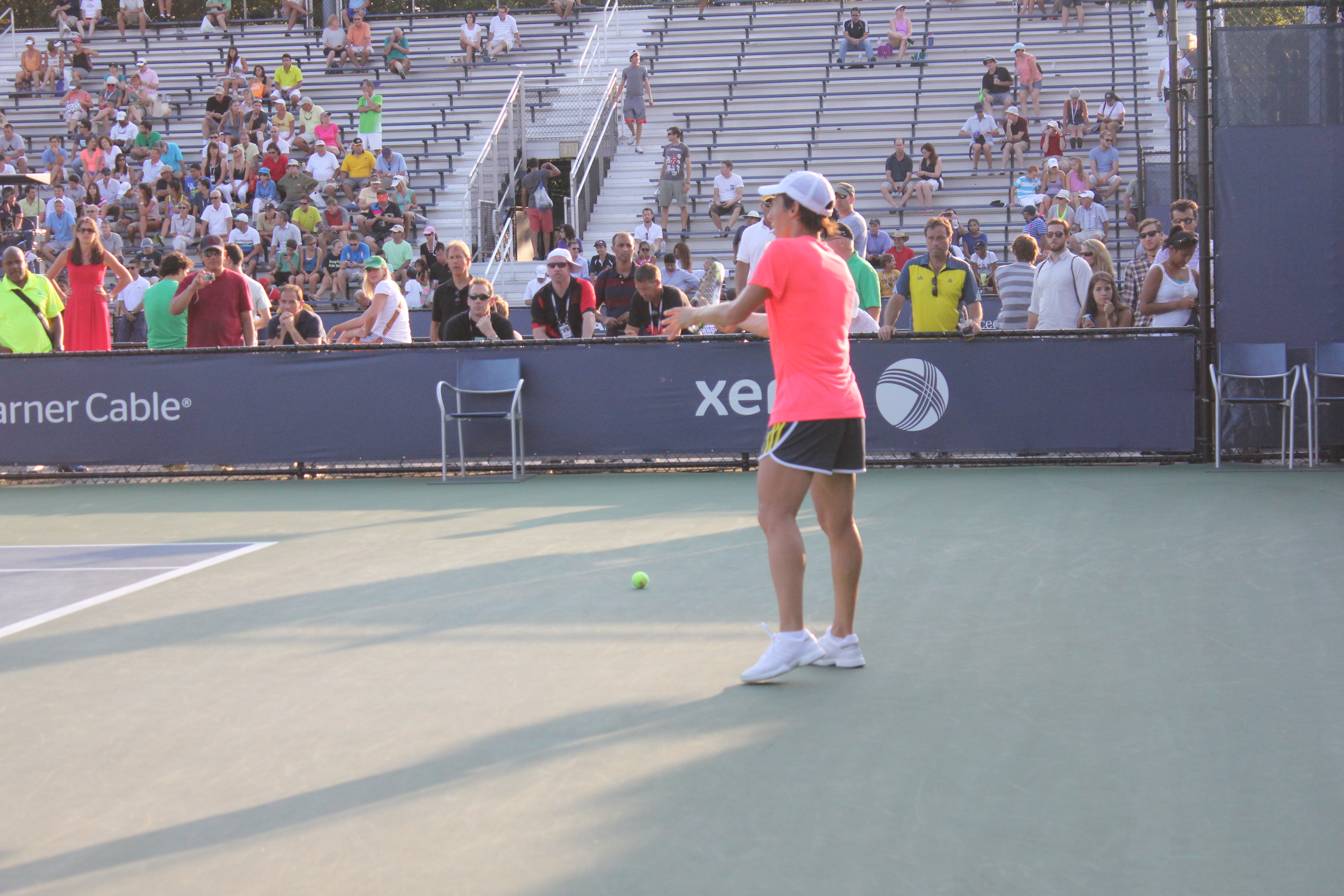
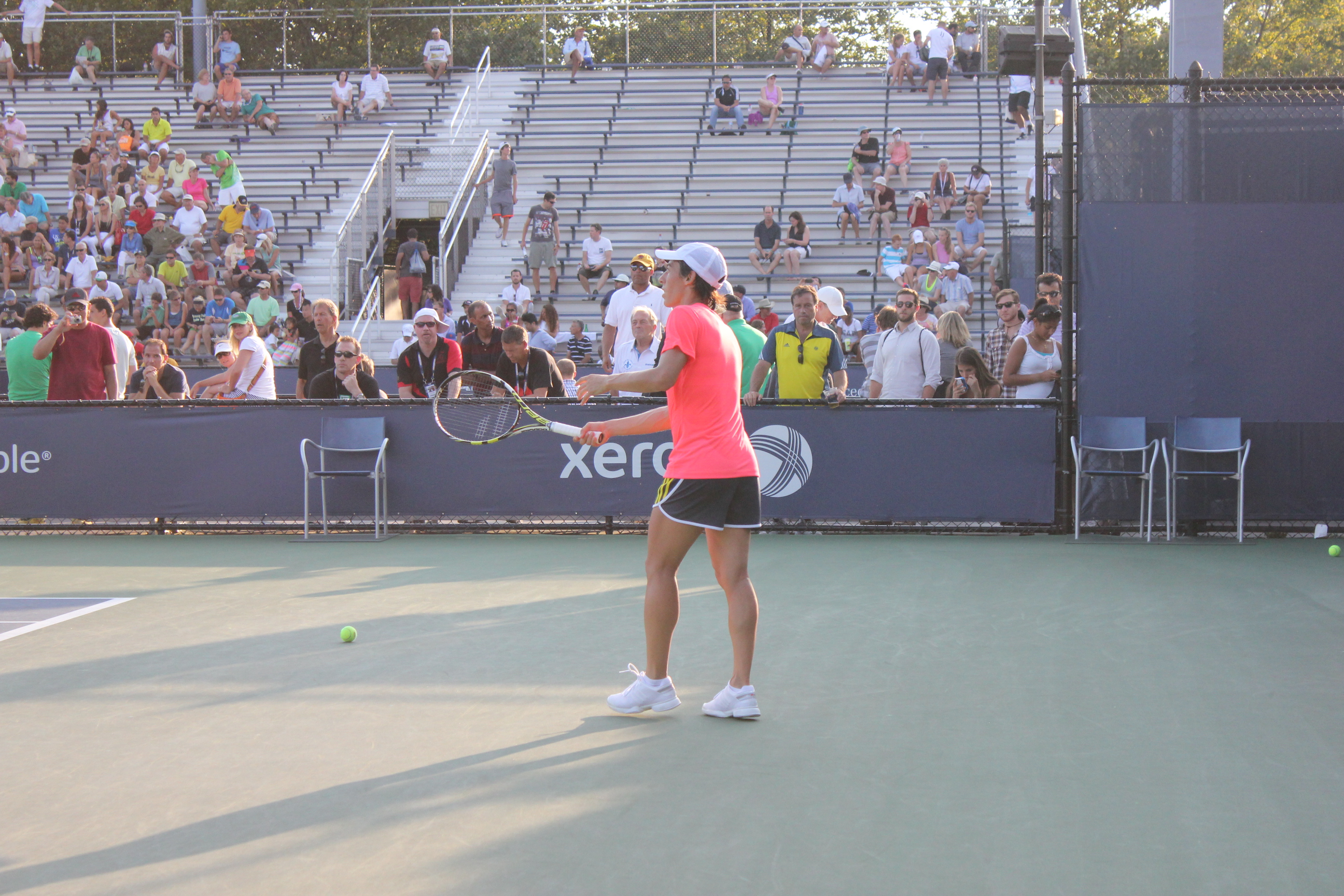
Li Na is facing off Serena in the 2013 US Open semi final. Their last grand slam encounter was also on the center court, Wimbledon 2010, on youtube.
My daughter turned 16 that summer and she wanted to have her Sweet 16 at Wimbledon. So London it was. We first took in another Les Miserables at Her Majesty’s Theatre to celebrated my son’s birthday. Yes, I’ve many children and many birthdays during the summer. Nick Jonas played the roll of Marius. Even before the show started, many female and few male fans (about 30 or so) gathered at the back entrance in hope to catch a glimpse of the young singer/actor. I was sure the scene would mushroom after the show.
Heading to Richmond
Wimbledon tickets are notoriously difficult to get, they even run the lottery so I didn’t bother with it in advance. I took a chance which I thought was good, and as it turned out, it’s more than good.
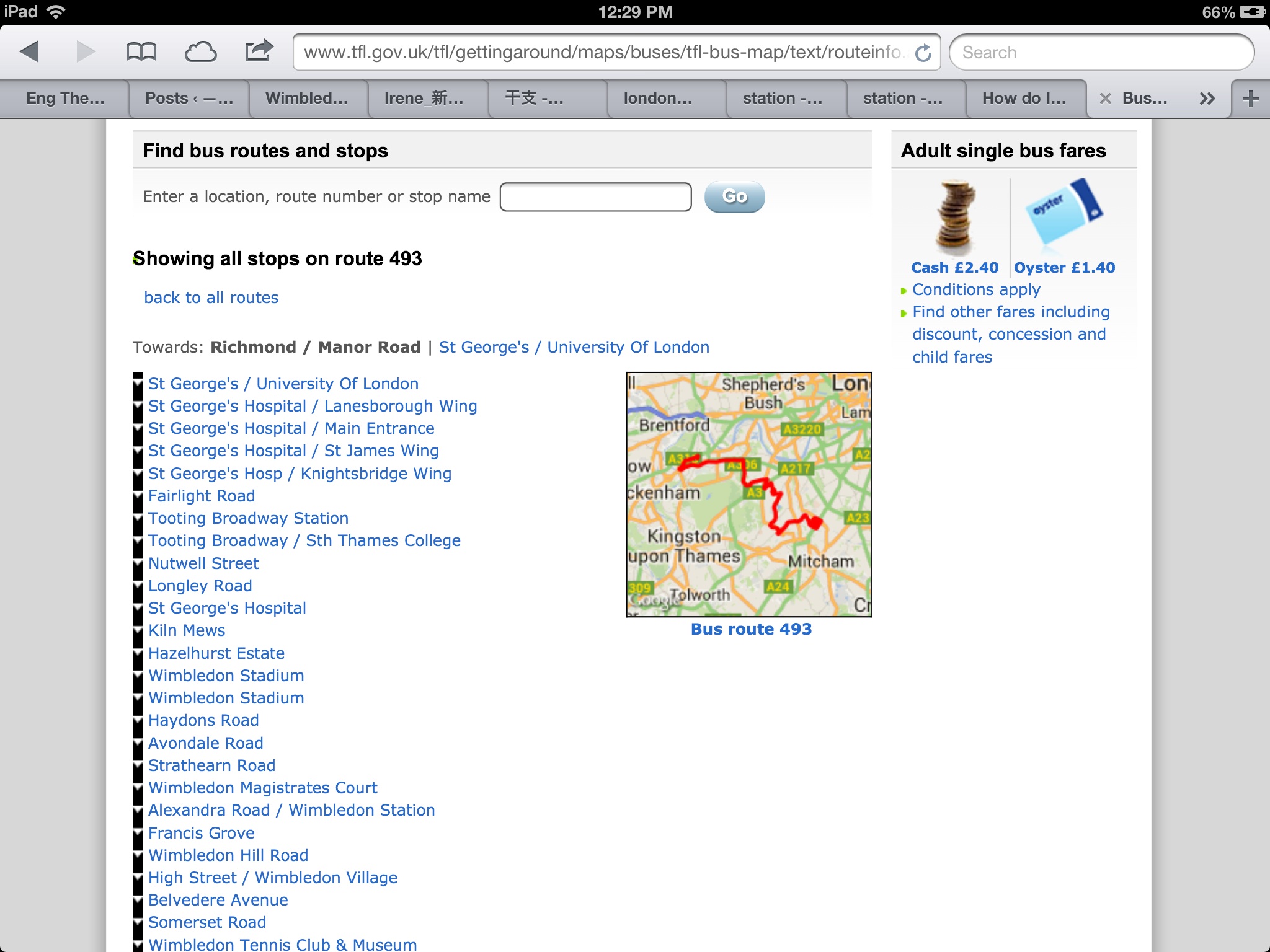
The London Underground (commonly called Tube) green line is the Wimbledon line, should get off at Southfields (two stops before Wimbledon Station), then it’s a 10 minutes walk to the tennis complex known as the All England Lawn Tennis and Croquet Club, on a very residential street. The bus route 493 goes there too (see the insert at left). Of course there are taxis and limos and parking lots.
The area of Wimbledon is about 9 miles southwest of Trafalgar Square in London. The biggest draw is the annual tennis championship. The lesser known are the New Wimbledon Theatre and the huge open space (1,100 acres) Wimbledon Common.
Getting off the Tube at Southfields Underground Station we were greeted by crowds as well as many policemen who tried to keep the crowds in check, and direct the road-retards like me. The junction at the station, to the east side of the Wimbledon Park Road is Replingham Road which has many stores and coffee shops, and to the west is Augustus Road. We walked south on the Wimbledon Park Road. Shops dotted the first couple of blocks then became all houses and apartments. Although the footpath is narrow but it was very pleasant to walk, especially on the way to the championship. In the late afternoon or evening when everyone was leaving, the path on either side was overwhelmed.
The championship was well organized. Upon entering the complex, for those without a ticket, we were handed a numbered ticket to wait on the long line to buy a ticket. We had good time chatting with our neighbors. Along the way, there were loud speakers broadcasting the live actions we hoped to see. Two spots before us was a groups of young women having their girls day out. They completed the fun with luxurious lunch spread with champagne and caviar. A few spots behind us was a family whose three young sons displayed their acrobatic ability on the grass to entertain us. To avoid all day time line of course you can camp there over night with your own sleep bag or tent, and party. It took us three hours to reach the ticket booth. They didn’t take credit card, cash only. After 5 pm each day, the tickets sell at a reduced rate.
Exquisite was the word came to mind when we finally hit the ground, inside of the gate. It was crowded but not massive.
The following day we went before noon, the line was drastically short, about an hour long. On the third day which was the ladies quarter final, we went immediately after breakfast, there was no line to queue, straight to the ticket booth. The young women asked us,
“What kind of ticket would you like?”
I looked at my daughter, wanting to know if she had a preference.
Before she replied, the young woman offered,
“Would you like the Centre Court?”
Our eyes lights up. Her birthday present wrapped neatly and served on a silver plate.
“Of course.”
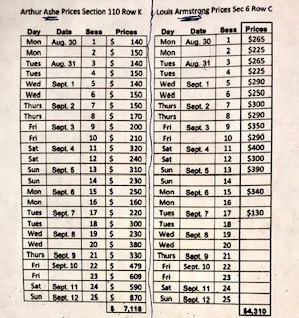
My wallet was £158 lighter but our seats were marvelous. The Centre Court is much smaller (15,000 seating capacity) than the monstrous Arthur Ashe (23,200 – at the top of the stadium, I wondered that if the spectators are in the airplanes from La Guardia airport.) Following Vera Zvonareva defeat Kim Clijsters (3-6 6-4 6-2) was Serena vs Li Na. The American disposed Sister Na 7-5, 6-3. The scores might suggest a close match but in fact Serena won relatively easy. After kiss off, they spoke under the chair empire for a prolonged time.
It was my first time watching Li played. I thought she’s at the end of her career or nearing it. However, 有志者事竟成 there is a will, there is a way. Less than a year later she would become the first Asian player to win a grand slam.
The trip was wonderful. My children now are attending the school of their choice. There is a will, there is a way.
Li Na lost the match at 0 and 3 just now. Brutal but it doesn’t diminish her effort to try at her best.
我正在看2013年美国网球公开赛半决赛,李娜对小威。他们的最后一个大满贯相遇是三年前在温布顿网球公开赛的中心球场。
那年夏天我的女儿将满十六,她想去温布顿庆祝她的甜蜜16,所以我们去了伦敦。百老汇的“悲惨世界”在女王陛下剧院上演,( Nick Jonas )尼克乔纳斯饰演马吕斯(Marius)。正巧是我儿子的生日。哈哈,我有很多孩子,很多夏天的生日。在开演前,许多尼克的粉丝(约30左右)就已经聚集在后面的入口处希望可以瞥见他们的偶像。散场后那里的人群大了好几倍。
温布顿网球公开赛的门票是出了名的难买,他们甚至运用彩票的制度,所以我没有提前买票。我觉得到了再买的机会不错。事实上果然如此。
温布顿在伦敦的特拉法加广场 (Trafalgar Square)的西南约9公里的地方。她最出名的莫过于一年一度的网球赛。鲜为人知的是新温布顿剧院和1100亩大的温布顿公地 (Wimbledon Common)。伦敦地铁的绿线是温布顿线,坐到 Southfields(倒数第三站)下车,然后步行10分钟就可以到达全英草地网球和槌球俱乐部。巴士路线493也经过那里(请见插图入左)。当然也有出租车和豪华轿车和停车场。
温网组织的很好, 他们派发一个有编号的票给我们这些无票的人 排队买票。虽然我们足足等了三个多小时但是和前后的邻居们聊天,一路上都有直播广播陪伴。在我们面前的是几个年轻女性,豪华的午餐香槟和鱼子酱。在我们身后有家人三个儿子在草地上的刷杂技娱乐我们。为了避免白天等待, 当然也可以用睡袋或帐篷扎营过夜。三个小时过得很快。售票亭不收信用卡,只收现金。下午5点以后门票销售有折扣。精致是第一个词浮现在我脑海中。小巧精笼是第二个。白球衣绿草地,十分养眼。
总结经验,我们一天比一天去的早。第三天我们上午十点就到了售票亭报道。几乎没有什么人。
“你喜欢什么位置的票?”
我看着我的女儿,想知道她是否有偏好。
在她回答之前,这位年轻的女子提供
“你愿意中心场地?”
我们的眼睛亮起来。妹妹的生日礼物。
“当然。”
我的荷包轻了158镑但我们的座位很好。温网的中心球场只有15,000 个座位,比美网的 23,200 个座位小得多。视觉很舒服。 由于美网近机场,我常常分不清坐在最上面的观众是否刚刚从天上的飞机里掉下来的。第二场比赛是李娜对小威。那是我第一次看李娜,虽然比分挺接近的,但事实上,小威赢得相对容易。打完后她们在网边聊了很久 我还以为她就要退休了。
意想不到第二年她成为亚洲第一个赢得大满贯的网球员。
有志者事竟成有决心
其实生活本身还不是一样?
李娜刚刚输掉了,6-0和6-3。挺残酷的,但是我知道这并不会抹杀她的努力和意志。她不会放弃;会卷土重来的。