Jimmy Connors

1991 US Open was shaping up to be an exceptional one. Pete Sampras had just stunned the world to win it last year as the youngest male player. His serve and volley and single hand back hand were just amazingly beautiful and lethal. The two old warriors Jimmy Connors and John McEnroe were still competing. It seemed USA could do no wrong. In fact Americans would dominate tennis: boys do the ATP, girls do WTA, then added Williams sisters in 1995 (Venus 1994; Serena 1995)
Chris evert ( -1989)
Davenport (1993-2010)
Jennifer Capriai (1990-2004)
Monica Seles (1989-2003,2008) becoming USA 1994
Martina Navratilova (1975-1994)

Man list http://en.wikipedia.org/wiki/List_of_Grand_Slam_men’s_singles_champions#1960s

http://en.wikipedia.org/wiki/List_of_Grand_Slam_women’s_singles_champions#1960s

http://sportsillustrated.cnn.com/2011/writers/bruce_jenkins/08/30/jimmy-connors/

http://sports.espn.go.com/nfl/news/story?id=4422313

The excitement started early, from the first round when Jimmy Connors, at age 39 defeat

1992 (held from August 31 to September 13, 1992) birthday cake ….

Pete Sampras (born August 12, 1971) win 1990; 1991 QF

Jimmy Connors (born September 2): He would continue to compete against much younger players and had one of the most remarkable comebacks for any athlete when he reached the semifinals of the 1991 US Open at the age of 39. 1992 2R

John McEnroe 1991 3R; 1992 4R


Leave a Comment

Wellness

Leave a Comment

Maria’s mom

One of the darlings of the game indeed had to crosses over the mountains and seas [翻山过海] to jump start her career.

The Wimbledon final in 2004 was Maria Sharapova’s coming out party. Unexpectedly the 17-year old found herself on the same court with the six-time grand slam owner Serena Williams. How did she elk outthe two-time defending champion was somewhat drowned in her nonstop thunderous grunts. I did not remember how convincingly she won her first slam: 6–1 and 6–4 (I cheated: googled it) but remembered the comments from the NBC sportscaster Mary Carillo who recounted her journey from Siberia to the sunny Florida. Her repeat fanning of Maria’s separation from her mother for two years in order to pursue her career left me bemused:

“She came with her father from Siberia and did not see her mom for t-w-o y-e-a-r-s. She was only seven years old!” The seasoned commentator stressed it r-e-p-e-a-t-e-d-l-y and would resume repeating it many more times at a few subsequent tournaments when Sharapova played. I was a little dumbfounded.

Really Mary?

What was so hard being separated from your mother?

Two years away from her mother, with her loving Dad, was hard to endure? Is it the American entitlement or American’s family value at it fullest?

Leave a Comment

Golfing Mongolia: A 2.3-Million-Yard Par 11,880

NYT July 4, 2004
ARVAYHEER, Mongolia— André Tolmé sized up the day’s golfing terrain thousands of yards of treeless steppe rolling toward a distant horizon. Without a golfer to be seen for 100 miles around, he loosened up at his own pace, taking practice swings with a 3-iron.

Then, with a powerful clockwise whirl and a satisfying swak! he sent the little white ball soaring far into the clear blue Mongolian sky.

”I feel good about that shot,” Mr. Tolmé said, intently tracking the ball until it disappeared from view. ”You could just hit the ball forever here.”

In a sense, he is. This summer, Mr. Tolmé, a civil engineer from New Hampshire, is golfing across Mongolia. Treating this enormous Central Asian nation as his private course, he has divided Mongolia into 18 holes. The total fairway distance is 2,322,000 yards. Par is 11,880 strokes.

”You hit the ball,” he said, explaining his technique in a land without fences, a nation that is twice the size of Texas. ”Then you go and find it. Then you hit it again. And again. And again.”

Moving across the rolling steppe, he is walking a route favored almost a millennium ago by Genghis Khan. The fairway may be something less than manicured, but to the north are Siberian forests and to the south is the Gobi Desert, one of the world’s largest sand traps.

With his caddy, Khatanbaatar, carrying water, food and a tent in a Russian jeep customized with an upholstery of hand-woven rugs, Mr. Tolmé teed off May 28 and calculates he will finish his game in the trading center of Dund-Us, which is also known as Khovd, sometime around the end of July.

That a lone American, armed only with a 3-iron and an easy, impish smile, can golf across Mongolia reflects several factors: the friendliness of largely Buddhist Mongolia to Americans; Mongolia’s geography of vast expanses; and a new extreme golf movement that is prompting young Americans and Europeans to break way out of country clubs.

For Mr. Tolmé, 35, it is also a summer adventure: a night listening to a chorus of howling wolves; standing dumbstruck as children race horses down the steppe toward him; enjoying the hospitality of the nomads, drinking fermented mare’s milk inside a yurt; and watching as sheets of rain and lightning bolts march down the open plain.

”Hey, I watched the movie ‘Caddyshack,’ I know to keep my club down when there is lightning around,” he said. A few minutes later an early summer hailstorm struck, driving him into his jeep.

To Mr. Khatanbaatar, Mr. Tolmé’s golfing style is a bit of a mystery. ”I don’t know anything about golf, but what I saw on TV, they put the little ball in a little hole,” said Mr. Khatanbaatar, a retired soldier who still wears camouflage military fatigues.

Mr. Tolmé, who learned rudimentary Mongolian while golfing across the eastern half of the country last summer, explains that he considers each major town to be a golf hole. Pocketing the ball upon arrival, he walks through the town and then tees up on the other side.

”I only use the tee when I start a hole,” Mr. Tolmé said, adding that he plays by ”winter rules because Mongolia can be often cold.”

Last summer, Mr. Tolmé teed off on June 5 in Choybalsan, an old Soviet Army garrison town in Mongolia’s far east, facing the Chinese border. Fifty days and 352 lost balls later he surrendered to nettles and high weeds and halted his march in this interior town, his ninth hole, a place described in the Lonely Planet Mongolia guide as of ”little interest” with ”dreary hotels.”

But Arvayheer is about 100 miles west of Mongolia’s geographical center, and Mr. Tolmé is confident that, about 5,000 strokes from now, he will putt his last ball into Dund-Us, reaching a Western Mongolian destination popular with tourists for its deep lakes, high mountains and fast rivers.

Guided by a hand-held Global Positioning System device, he expects to golf about 10 miles a day, skirting mountain ranges and passing sites like crumbling monasteries and a dinosaur bone quarry.

Mr. Tolmé’s only deadline is to beat the late July rains and the subsequent weed explosion. On the steppe, one of his greatest pleasures is meeting people. Alone under the big sky, chatting occasionally with sympathetic sheep, he now places a new value on human relations.

”I am amazed at how easy it is to live very happily with very little, without gadgets and toys,” he said as he bounced along a potholed road leading from Ulan Bator, the capital, to here for his second summer tee-off date. ”When I meet people living in a yurt, simple homes in the countryside, they laugh, they joke, they all know how to have fun.”

Mr. Tolmé’s Web site about his adventure — www.golfmongolia.com — is filled with amiable encounters with nomads: a pair of teenage boys teaching him how to shear a sheep and how to hobble a horse; free golfing lessons that left a few more rock scratches on his 3-iron; and major drinking sessions that left everyone fast asleep in a cozy yurt.

The human encounters, he said, more than made up for the flies, the blisters, the sunburn and the poisonous snake that once curled around a ball, protecting it as if it were an egg.

”When I say I am American, the universal response is, ‘Ah, American, very good country, we like Americans,’ ” he recalled. Part of the response is geopolitical. Treated as a colony of China for hundreds of years, Mongolia won its independence in 1911, only to fall a decade later under the Soviet orbit. Today, the Mongolian government cultivates friends beyond Russia and China. Many Mongolians are followers of Tibetan Buddhism, and suspicion of China is high.

There are signs that Mongolians are awakening to their golf potential. Last year in Ulan Bator, the first golf course opened, complete with horse-mounted caddies who charge after balls, marking their locations with flags on arrows. Last month, the first indoor driving range opened, also in the capital, which was Mr. Tolmé’s sixth hole.

But, some argue, Mongolia could skip the country club phase of golfing, and embark directly on cross golfing, a populist new trend for hitting balls through unorthodox settings like city parks and streets.

With an open, rolling countryside and fairways cut by roughly 30 million grazing animals, Mongolia is ideal for the casual backyard duffer. Here at a roadside yurt camp, a Mongolian man named Bayara looked at one of his five children preparing to take a hack at the ball and predicted, ”Within a few years, these kids will probably be holding sticks of their own.”

Leave a Comment

Mary Pierce

SI, August 23, 1993

  • 1975-01-15, Montreal
  • 1985, 10 years old – picking up tennis
  • 1986, Mary has not had a permanent home or attended school since 1986
  • 1988, the family was asked to leave the Harry Hopman Tennis Academy in Wesley Chapel, Fla
  • 1989, turned pro at the age of 14; USTA’s player-development program withdrew its funding
  • 1993 Aug:  18 years old and ranked No. 14
  • 1995 won Aussie Open
  • 2000 won French Open
  • 2005, reached QF at Wimbledon and F at US Open, to Kim Clijsters
  • 2006 retired
  • prize money $9,793,119
  • Graf (1969.06.14; 1982-1999; $21,895,277; 22 slam titles)

Mary was the power tennis before the Williams sisters. I remembered seeing her out power Steffi Graf. the sound of Mary’s racket striking the ball was far more loud and assertive than the reign queen of the tennis at the time, Graf.

Why did domestic abuse victim stay? Among the tennis prodigies, I feel most tender toward Mary Pierce who had retired in 2006. Not because of her tennis but her turbulent family. She is tall (5’10″/1.78 m) and well-built [strong] but her set of large eyes has uncharacteristic resignation, uncommon for a girl of her age and strength. Although she had won two grand slams but I remembered her for her abusive father. Before I started my genealogy research and poking deep into my own past, I often wondered why didn’t she just pack up and leave. Actually why didn’t other domestic abused victims leave.

Leave a Comment

Seles’ drop shot

Chase Manhattan Bank CEO Walter Shipley and tennis star Monica Seles rang the opening bell to start trading at the New York Stock Exchange on Aug. 31 [1998], the first day of the U.S. Open. The tennis theme produced a drop shot rather than a rally: The Dow rocketed down 512 points, a 6.4 percent decline for the day.

On the first day of 1998 US Open, I was watching the morning financial news and spotted Monica Seles rung the New York Stock Exchange opening bell. It was five year (April 30, 1993) after her unfortunate stabbing accident in Hamburg by a Steffi Graf’s fan.

The motivation of the German man who stabbed her was to make his idol Graf ranked number one again. Seles met Graf in four Grand Slam finals and defeated Graf three times. I was not privies to the discussions of the Women’s Tennis Association (WTA) and the female players but ultimately Graf gained number one again, in the absence of injured Seles, fulfilling the attacker’s wish. In my uninformed mind I thought the WTA should have vacant the No One spot till Seles was able to compete again.

I was not a fan of Seles because of her style of swing and ah-yi grunting. But sicken by this ordeal, I began rooting for her. Unfortunately for the injury, more physiological than physical, she would only win one more slam, her 9th grand slam title at Melbourne in 1996. It would be her last. [She won Australia in 1996; last match in 2003; retired in 2008.]

Although the bull market from 1982 to 2000, saw the most spectacular rise in the Dow history. However, that Monday was not her day.  By closing, the Dow Jones Industrial Average DJI dropped 512 points, wiped out the entire year’s gain.

______________

file 19338 page
Giving Seles her Due, 2013.04.29
Monica Seles: A bubbling career pierced with a knife, 2008.02.15
CNN Money, Dow plunges 512 points, 1998.08.31
NYT on Seles losing her #1, 1993.05.30
Wiki the stabbing, 1993.04.30
1990 French Open 1st set videos

Leave a Comment

Indy 500

Watching Marco Andretti’s interview right after the checker flags, that he could have blocked Hornish to win but feared that would cause crash. My first thought was (as a parent) wow what a decent boy, then thought how ironic that he drives for NYSE which abides to no risk no gain motto, and lastly, what a story would be if either Adnrettis had won … especially in the light that Michael who perhaps has won the most Indy races but never the ultimate Indy 500 …

Leave a Comment

My first tennis

Leave a Comment

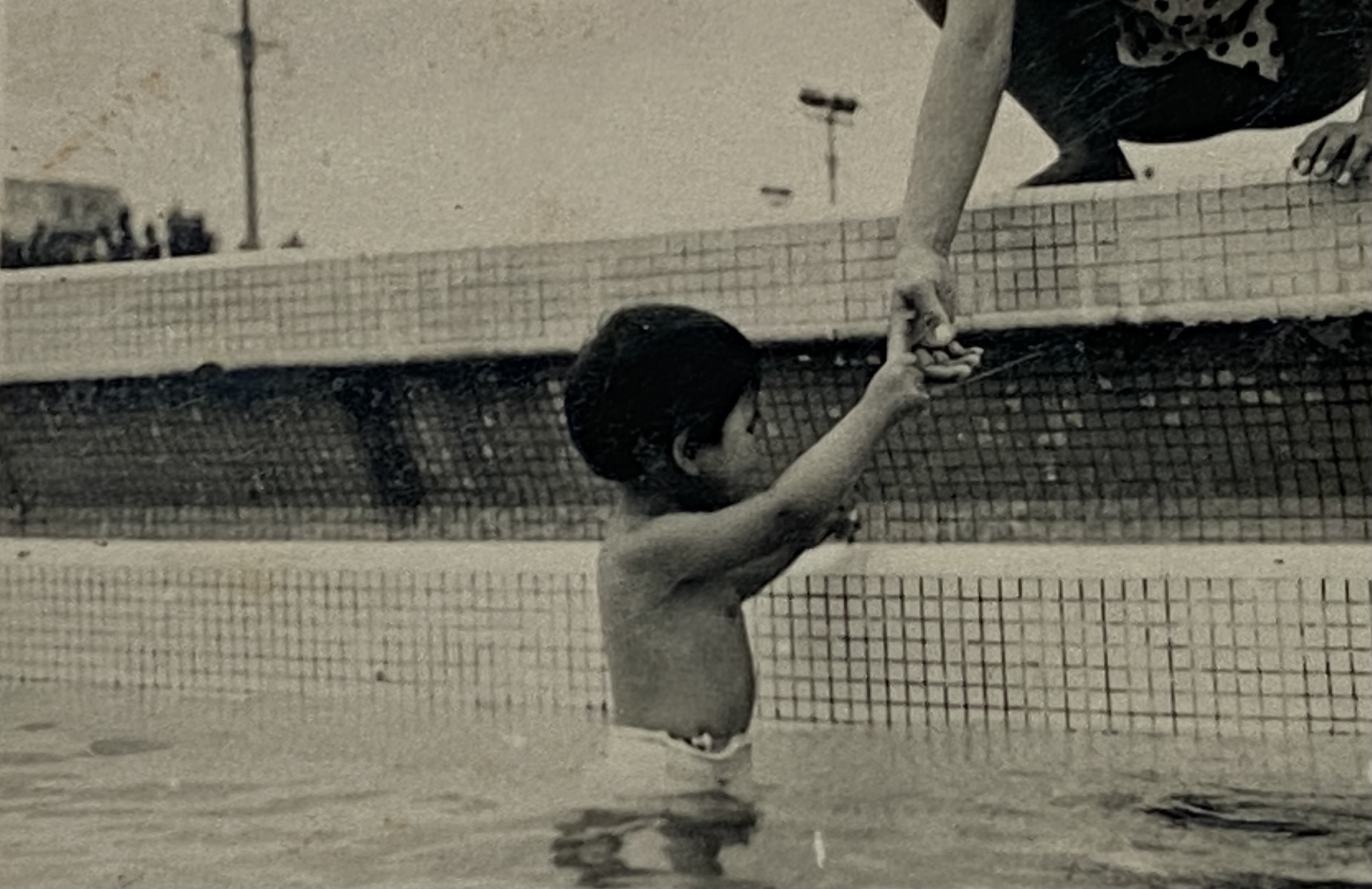
At a pool

July 2, 1963

Leave a Comment

« Newer Posts